Best Digital Calipers for the Money

Precise projects call for precise tools. When measuring, often that tool is a quality set of digital calipers.

And when we’re talking about CNC machining, we’re talking fractions of inches, not yards. 

Unfortunately, tools capable of ultra-accurate readings can run away in price, while the measurements given by cheaper models can be so far off that the tool itself is useless.

Fortunately for you, we’ve gone on the hunt and found the best value digital calipers on the market.

Name

Awards

Where to Buy

Starrett 798A-6 0-6" Digital Caliper

Best Digital Caliper < $200

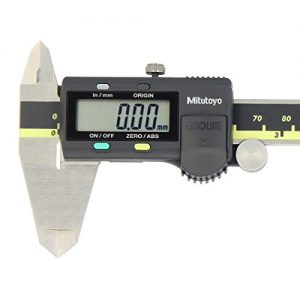
Mitutoyo 500-196-30 0-6" Digital Caliper

Best Digital Caliper < $150

iGaging Absolute Origin 0-6" Digital Caliper

Best Digital Caliper < $50

VINCA DCLA-0605 0-6" Digital Caliper

Best Digital Caliper < $25

Best digital caliper under $200

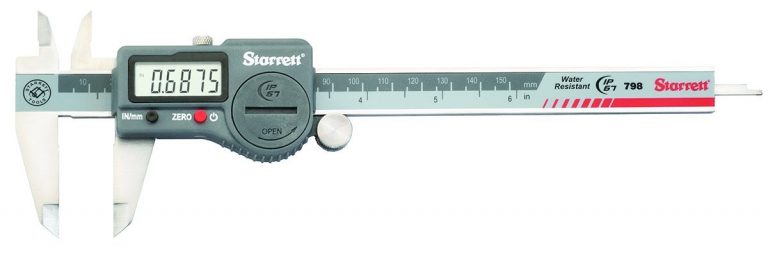
Starrett 798A-6 0-6" Digital Caliper
plus symbol

Pros

IP67 rating
Quality all around

minus symbol

Pros

Price tag

Admittedly, this caliper from Starrett is not going to be for everybody. Mostly because it comes with a hefty price, but if you have the extra cash lying around, the 798A-6 is absolutely worth the money.

Starrett has been making tools of all types for decades and the level of quality they have been able to hold over that time is remarkable. While they have been able to produce heirloom quality tools for a variety of uses, their measuring tools stand out as easily some of the best stuff on the market.

Starrett micrometers have long been the gold standard of precision and their digital calipers are very much up to the task as well.

The 798A-6 has an accuracy of 0.001″, or 0.254 mm and a resolution 0.0005″ or 0.010 mm. More importantly, this isn’t a spec pulled out of left field somewhere. These calipers easily meet the specified accuracy. In fact, we have found that many exceed the listed accuracy and are accurate to 0.0005”. They don’t spec it, so there is no guarantee but likely you will find them more accurate than they claim.

In addition, this set of calipers holds its zero extremely well so you won’t find yourself resetting them often like you might with a budget tool.

The 798A-6 is made of high-quality stainless steel. The parts that are not stainless steel such as the LCD display feel well made as well. No cheap thin plastic here.
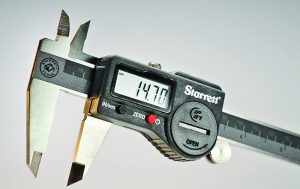
Speaking of the display, it is large and easy to read. A nice feature of the display is that it comes with a limited number of buttons to fiddle with. A button to switch from inches to millimeters and another to turn the unit off and on are the only two buttons present. The on/off button can be held to zero the caliper at any location for taking measurements relative to a standard. Keep it simple.

One feature that is so-so is the battery life. It is listed as one year which is good but not as long as some other high-end calipers such as the Mitutoyo 500-196-30 which lists a three-year battery life.

The battery life of this Starrett caliper is likely hampered by the auto off feature which takes 30 minutes to kick in. Something closer to 5 minutes would likely have been more than sufficient and kept the juice flowing longer. Making sure to turn the tool off after each use can help increase the life of your batteries.

Still, this battery life is very good and stacks up well above what you find with cheaper digital calipers, but it is one of the few areas where the 798A-6 isn’t the cream of the crop.

While they are noticeably well built, the included case is a welcome addition that will work to keep your caliper safe when it’s not in use. Way too often has a set of calipers been bumped off a bench only to hit a hard concrete floor. Stashing your prized calipers away when not in use will add an additional layer of protection.
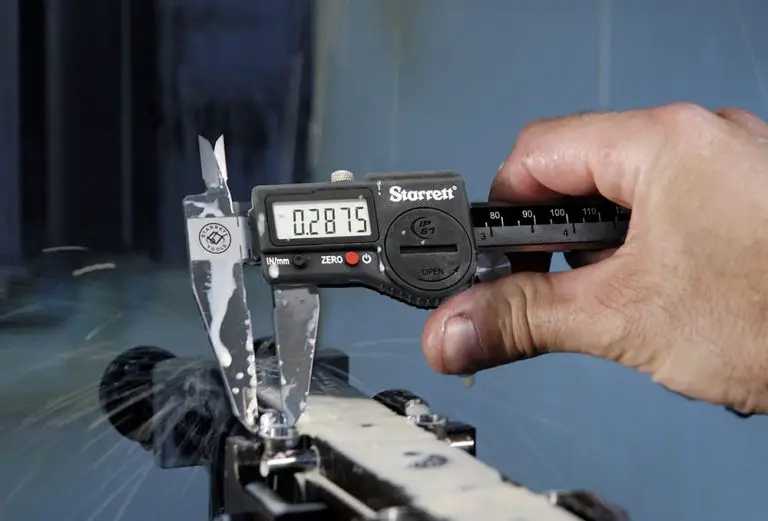
The main reason for the high price tag of these calipers is the tools protection from the elements. In the electronics industry, there is a rating called an Ingress Protection (IP) rating, which measures the amount of resistance a device has to dirt, water, and other contaminants that can mess with the device.

The Starrett 798A-6 digital caliper has an IP rating of 67. When reviewing other digital caliper models, you will find that most have no IP rating (no protection from water, coolant, dirt, etc.). The majority of digital calipers that are IP rated will have an IP rating of 54. We won’t get too far into the details here but be aware this is a large jump in protection even when compared to the IP54 rated calipers. If you want more info about IP ratings, jump to the IP Rating section of our Things to Consider list below.

Last but certainly not least, let’s talk about accuracy. This is the main reason you need a digital caliper after all. This caliper from Starrett, like many others they make, is extremely accurate. Additionally, it holds its zero very well which means you won’t be constantly resetting it to maintain that accuracy.

To sum it up, you’re going to have to pay a pretty penny for this caliper, but due to its build quality, IP67 rating and most importantly, the excellent accuracy, it’ll likely be the last caliper you ever need.

Best digital caliper under $150

Mitutoyo 500-196-30 0-6" Digital Caliper
plus symbol

Pros

Highly accurate
Long battery life

minus symbol

Pros

No IP rating

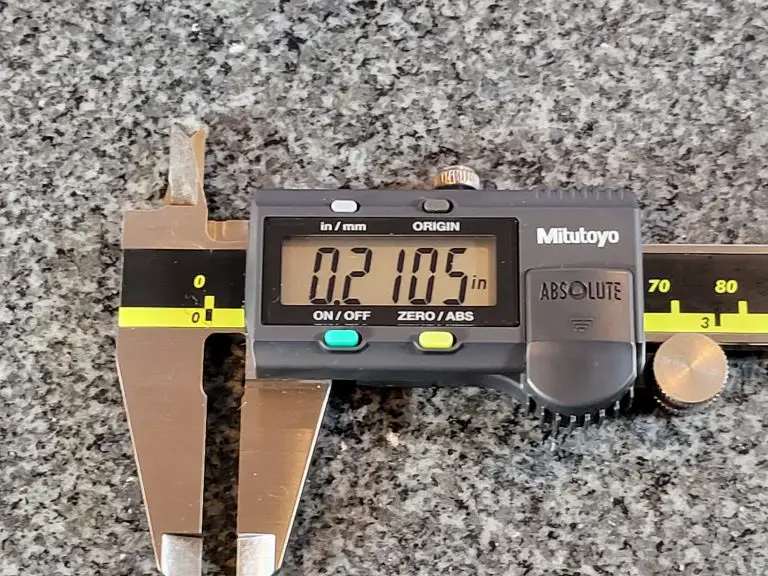
You may recall another article we wrote where we ranked this Mitutoyo as the best overall digital caliper on the market. Our opinion has not changed. While this caliper is on the pricier end, it’s cheaper than the Starrett yet still incredibly accurate and durable. We really think it’s worth the money, and that’s not the fumes from the wood finish talking. We mean it.

The 500-196-30 caliper is made of stainless steel and has an accuracy of 0.001”, or 0.254mm and a resolution of .0005” or .01mm. The accuracy is what is important here and this caliper is right in line with the best of the best when it comes to accuracy. Similar to the Starrett 798A-6, the accuracy that Mitutoyo is able to provide will exceed what they have specified the accuracy to.

Again, they aren’t guaranteeing this level of accuracy but it really goes to show the level of quality found in these calipers.
We also appreciate how well-marked this caliper is. The scale and large display are very easy to read and there’s no mistaking the on/off, zero/abs, or in/mm buttons.

Something that could be easily overlooked is just how fast the caliper is. The display updates very quickly when taking measurements. Switching from mm to inches is accurate and instant. Don’t blame the caliper if you accidentally take a metric reading, these bad boys are spot on.

While this caliper from Mitutoyo might not be IP rated, it is still well protected. It doesn’t have the same level of protection that the Starrett caliper has but it will hold up well to light dirt, dust, and coolant. I wouldn’t submerge them in anything or hit them directly with coolant, but besides that you should find they are pretty resilient. I suspect they don’t have an IP rating because the battery cover doesn’t seal well enough to meet spec. Speaking of batteries…
A truly standout feature of this digital caliper is the battery life. We’ve used a lot of digital calipers through the years and none have the battery life that this one has.  Cheaper models generally run out of juice in a span of months. Higher quality tools like the Starrett will last longer, usually about a year, possibly more depending on use. This Mitutoyo caliper claims a 3.5 year long battery life! I don’t have time to check that claim, but I do know I can’t remember ever changing a battery in any of the Mitutoyo calipers I own or have worked with. These things are always ready to take a reading.

All in all, the Mitutoyo 500-196-30 is a top shelf tool. Most of the digital calipers from other high-quality manufacturers will be in this same price range and as a result they should be benchmarked against this caliper right here.

If money is no option, it makes sense to go with the Starrett 798A-6 to get a couple extra bells and whistles, but if not then this Mitutoyo is the best option. This caliper sets the standard for what you should expect from a digital caliper.

Best digital caliper under $50

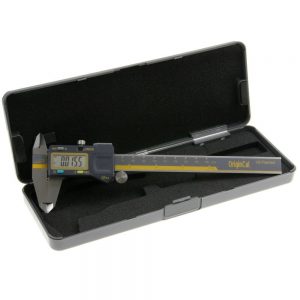
iGaging Absolute Origin 0-6" Digital Caliper
plus symbol

Pros

Two-year warranty
IP54 rated

minus symbol

Pros

Battery life

The iGaging caliper finds a nice middle ground between the expensive, incredibly accurate and highly durable models above and cheaper models that start to have questionable accuracy.

Made of stainless steel, this caliper has an accuracy of +/- .001” or .02mm, and a resolution of .0005” or .01mm. This is in line with what you would expect from a good quality caliper.

Perhaps the best feature of this caliper is its IP54 rating. It isn’t as good as the IP67 rating of the Starrett caliper we noted above but it still amounts to a solid amount of protection from the elements, especially because this is a budget friendly tool.

Another plus that is unusual for lesser priced tools is that iGaging gives you a two-year warranty on the caliper. Most manufacturers (even the really good ones) only give a one-year warranty, if any at all.

The IP54 rating plus the two-year warranty means iGaging stands behind this caliper and it should be up to task for quite some time.
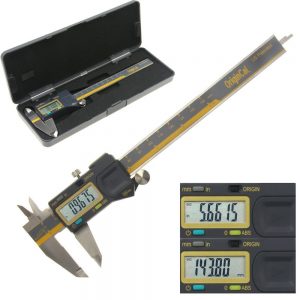
One downfall worth mentioning is that the iGaging caliper does lose accuracy as the battery power winds down. The problem here is that there’s no way to track the battery level.

We recommend checking your zero regularly to make sure you aren’t in need a new battery. The process is quick and easy. Also, remember to keep some spare batteries on hand for this reason as well.

While the battery issue isn’t ideal, we still think this iGaging caliper provides great value in terms of accuracy and overall build quality. The IP54 rating and two-year warranty are just the cherries on top.

Best digital caliper under $25

VINCA DCLA-0605 0-6" Digital Caliper
plus symbol

Pros

Price

minus symbol

Pros

Cheaper calipers generally less accurate

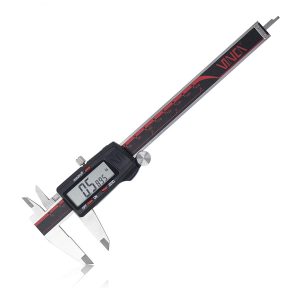
If you’re brand new to CNC machining, or if your budget is looking a little bit tight this year and you need to save on a caliper, one option would be to go with the VINCA DCLA-0605.

Though it’s a fairly cheap tool, it still provides a good amount of accuracy. The VINCA caliper has an accuracy of +/- 0.001″/.0254 mm and a resolution of 0.0005″/0.01mm. Remember, when picking a digital caliper, accuracy should be your main focus.

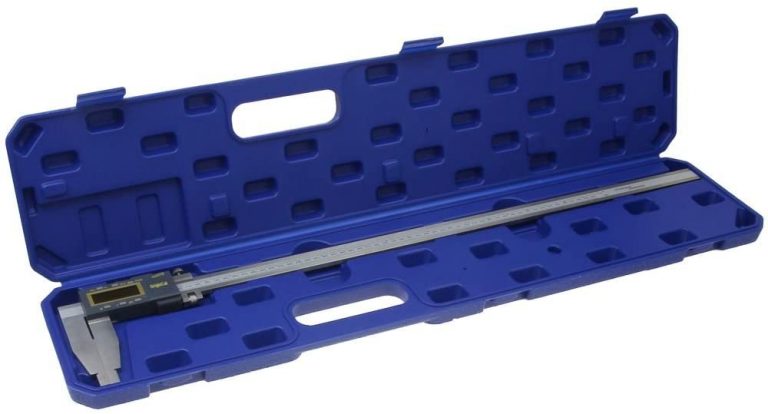
Additionally, this caliper comes with a case. For the price you’re paying, this isn’t a bad freebie, especially if you’re taking this caliper with you from site to site. Heck, even if you’re not travelling with your tool, it’s a good idea to protect it to ensure they remain accurate and protect them from the elements.
Another feature we like on this VINCA is the RS232 port. The port lets you plug the caliper straight into a computer to digitally transfer readings. Even just this slight bit of automation is a nice safeguard since inputting wrong measurements will cause your machine to make the wrong cuts, thereby ruining your project altogether.  

It’s worth noting that one of the nice features of these calipers can also be a pain. They turn on automatically when you slide them. The display also turns off after not moving for a bit.

In theory this is great but even the slightest movement or vibration can cause the display to turn on which drains the battery quickly. Luckily this can easily be remedied by gently turning the lock screw when you put them away to keep them in place.

This set of calipers from VINCA isn’t perfect, but they are accurate and cheap. I wouldn’t plan on them lasting forever but at this price point, this shouldn’t be an issue.

Neiko 01407A 0-6" Digital Caliper
plus symbol

Pros

Cheap
Measures in inches, mm and fractions

minus symbol

Pros

Display is awkward to read

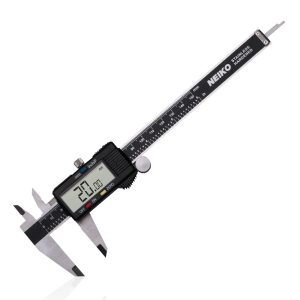
The Neiko 01407A is another solid option in the same price range as the VINCA.

When it comes to this end of the price range for digital calipers, you will find that many are the same Chinese manufactured tool with different branding slapped on top.

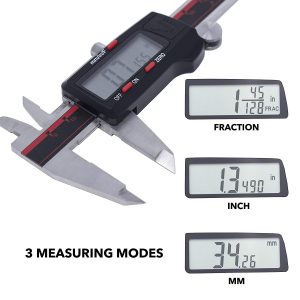
In this same vein, the VINCA and Neiko calipers have very similar displays which both read in inches, mm and fractions. This LCD is large which makes it easy to read but because they read in fractions (which aren’t that useful for most people) the last few numbers on the display are smaller which makes them a little awkward to read. It’s not a dealbreaker, but just something that takes a little getting used to.
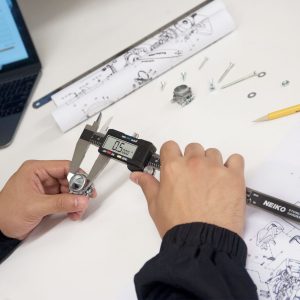
So, let’s get down to brass tax with these super budget calipers from Neiko and VINCA.

To be honest, we don’t really see a whole lot of differences between these two models. They offer similar accuracy, and both come in at around the $25 mark with similar features.

Just remember that these aren’t the kind of tools you will pass down to your kids but they will get the job down for a fraction of the price of the higher end stuff.

For these two calipers, our recommendation would be to buy whichever model is cheapest at the time. Keep your eye out for sales on these two models, and just go for the lower price. 

Can you find a cheaper digital caliper?

Sure, you can find calipers out there for dirt cheap. But you’re going to get what you pay for, so if you’re only willing to drop $10 on a caliper, just know that it’s not going to be very accurate.

We think it’s always going to be worth it to spend an extra ten spot on a nicer caliper. The two missed trips to Starbucks will be worth it for a tool that is both more accurate and more reliable.

Things to consider when looking for a digital caliper

Battery life
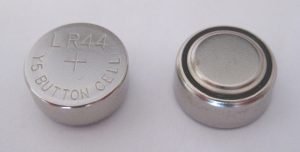
button cell battery for micrometer
Typical digital caliper battery

You might have noticed some of these calipers have a tendency to drain batteries, while others will last years on a single cell. Though most batteries aren’t incredibly expensive, they do add to the cost of the tool and it can be pretty darn inconvenient to have a dead tool and no backup batteries.

If you don’t go with a digital caliper with a long battery life, make sure to pick up some backup batteries to make sure your tool is always ready to go.

Measuring accuracy

After reading this review, you might’ve noticed that every caliper on here claimed the same measuring accuracy: +/- 0.001”. For Starrett or Mitutoyo, you can take them at their word for just about any spec.

If you are thinking about a tool on the bottom of the price range, then keep in mind that it might not actually meet the accuracy listed by the manufacturer. For this reason, we have prioritized accuracy in our budget friendly options above all other features.

If you need highly precise measurements that can be trusted without question, you better think about purchasing a more expensive caliper especially if you plan to use it for your day job.

Measuring accuracy vs resolution

Accuracy is how close a reported measurement is to the true value being measured. Resolution is the smallest change that can be measured.

Think about your car’s speedometer: Accuracy is how closely your speedometer measures the car’s true speed. Resolution is all of the little hashes on your speedometer, which indicate the speedometer can only measure in whole miles per hour (i.e. the speedometer reads “20 mph,” not “21.38 mph.”).

Be careful you don’t confuse the two. A digital caliper may give a reading (have a resolution) out to half a thousandth (0.0005”) but only be accurate to a thousandth (0.001”).

Measuring range

Every caliper we listed here measures 0-6”. This is by far the most common measuring range of calipers. You’re generally not going to need to measure sizes over 6”, especially as a beginner or hobbyist. If you are working in a machine shop, then likely the shop will have larger range calipers that can be used when needed.

0-6” calipers strike a great balance between measuring range and ease of measurement. Using a large caliper to measure smaller features can be very awkward. Use a 0-24” caliper to measure a 1” hole diameter, and you’ll quickly see what we mean.

IP ratings

As we mentioned earlier, an IP rating is the amount of resistance a device has to dirt, dust, water, and the like.

A lot of digital calipers – especially cheaper ones – have no resistance at all. If a caliper is IP rated, the average rating is IP54, which provides limited protection from dust and splashes of water. Honestly, for most people, IP54 is really all you’ll need for a caliper.

But some may want a more rugged caliper, and in that case there are some digital calipers which are rated IP67. This means they are virtually impervious to everyday dust and water.

With that being said, IP ratings don’t account for clumsiness, so if you drop your caliper on a concrete floor, it won’t matter what your IP rating is.

Below is a useful chart we made to help you navigate IP ratings. The first digit in a rating is protection from solids, while the second digit denotes protection from liquids.
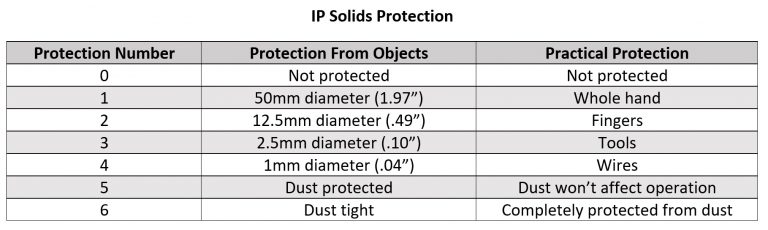
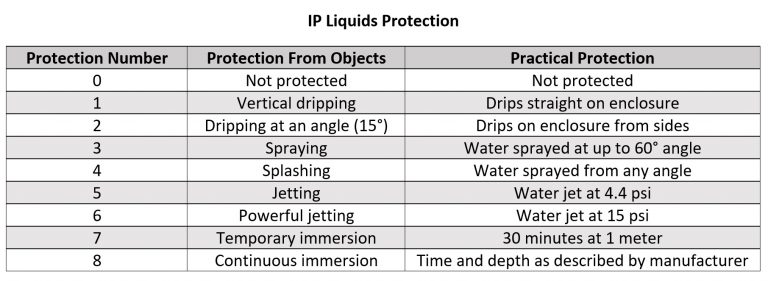
ingress protection (IP) ratings solids description
ingress protection (IP) ratings liquid protection

Cases

Speaking of protection, some calipers will come with a case. These are precise measuring tools, which means they can be a bit delicate at times. It’s definitely not a bad idea to either buy a caliper that comes with a case or purchase your own.

Cases protect your investment and make locating your tool easier.

Materials

A good rule for calipers is to find one made from stainless steel. Though you may find models made from carbon fiber composites or plastics.

Again, we recommend a stainless-steel model, but the other kinds do have their benefits. A carbon fiber caliper is much less likely to scratch up wood, for example. They’re also non-magnetic, if that would be an issue for you.

Keep in mind the materials that you plan to work with but for most people, we recommend stainless steel calipers.
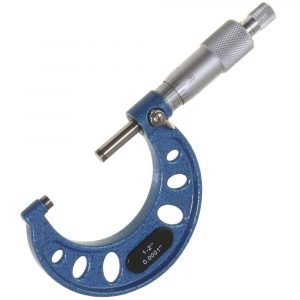
26 Types of Micrometers [Includes Pictures & Descriptions]

Micrometers come in many shapes and sizes. 

Our comprehensive list covers all of the most common and many uncommon micrometers found in machine shops, garages and workshops around the world.

Read on to see how many you’ve used or how many you even knew existed.

The most common types of micrometers

Outside micrometers

anytime tools 1-2" micrometer
Anytime Tools 1-2" Outside Micrometer

Otherwise known simply as mics. Your standard everyday micrometer. Used for measuring outside diameters, lengths, widths, thickness, etc. Commonly available in 1” measuring ranges.

The typical accuracy of an outside micrometer is 0.0001”.

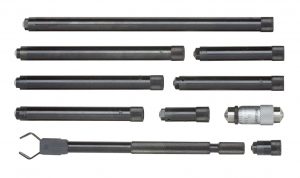
Inside micrometers

mitutoyo inside micrometer set
Mitutoyo Inside Micrometer Set

Used for checking internal widths, diameters, and bores. The typical accuracy of an inside micrometer is 0.001”.

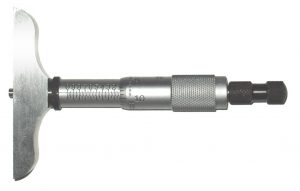
Depth micrometers

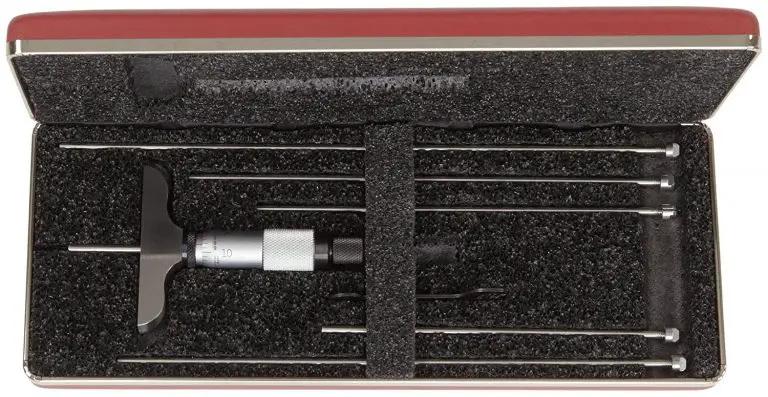
Starrett Depth Micrometer

Used for measuring the depth of slots and holes as well as the location of various steps. They tend to be less accurate than a standard micrometer. Most will have an accuracy of +/- 0.001”.

Styles of micrometers

Standard vernier micrometer

The old standby. This type of micrometer has been produced for decades and I’m sure will continue to be around for many more years.

They feature a rotating thimble that has a vernier scale wrapped around it. This scale is matched up with the scale on the sleeve to obtain your measurement.

Digital micrometer

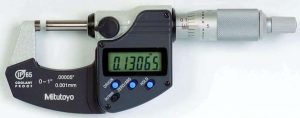
mitutoyo digital micrometer
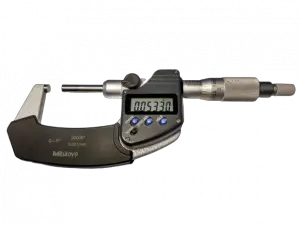
Mitutoyo Digimatic Digital Micrometer

Many of the micrometers listed are available as a digital version as well. Do not expect anything different between a digital and standard micrometer other than the display.

They have the same accuracy. Digital vs non digital is just a matter of preference.

Mechanical counter/digital mics

mitutoyo mechanical counter micrometer
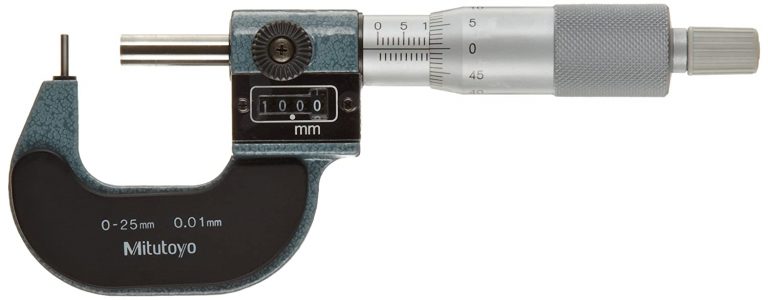
Mitutoyo Digital Counter Micrometer

A less popular option, some of the micrometers listed can be purchased as a mechanical counter version. Some of the manufacturers call them digital, but the term is misleading.

Personally, I have never found them superior to other mics. I would avoid them. You can expect their accuracy to be in line with a standard micrometer of the same type.

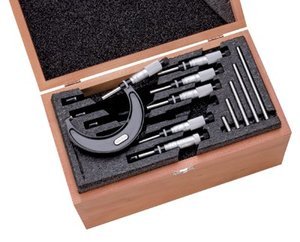
Micrometer sets

anytime tools micrometer set with case and reference standards
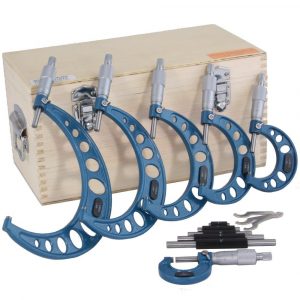
Anytime Tools Micrometer Set

Because micrometers have a smaller measuring range when compared to some other precision measuring tools such as calipers, they are often purchased as a set. Micrometer sets are commonly available in 0-3”, 0-6” and 0-12” varieties with many other less common sets being available as well.

Micrometers with different spindles and/or anvils

Carbide tipped anvil and spindles

Carbide tips provide additional wear resistance for a micrometer, especially one that may see extra heavy usage. While they can be useful in this regard, the carbide tips are more brittle and have been known to chip.

For most people, your standard stainless-steel spindle and anvil will be good enough but both types work well.

Non-rotating micrometers

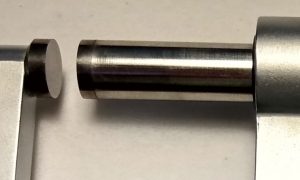
These micrometers work well for a number of applications. The spindle on this type of micrometer doesn’t spin to increase the accuracy of the measurement. It also has the added benefit of being less likely to damage surfaces where surface finish is extremely important.

Micrometers with rounded anvils

These micrometers allow you to measure features that are not flat such as the wall thickness from the edge of a hole another surface.

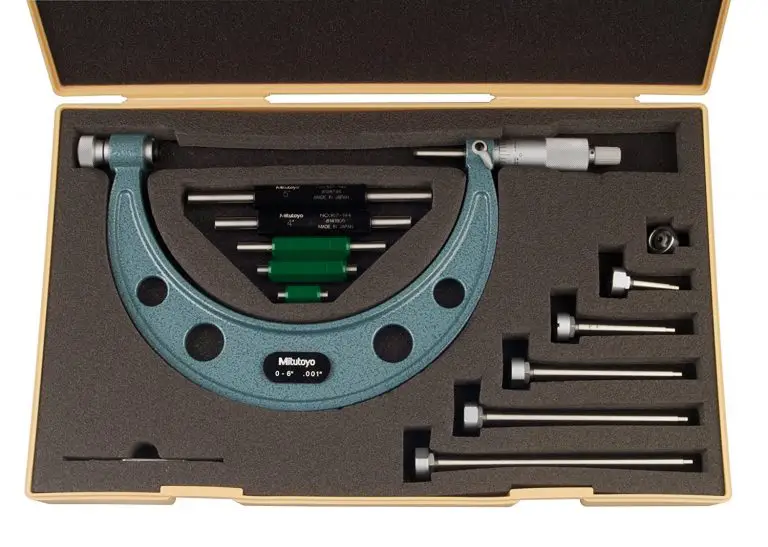
Micrometers with interchangeable anvils

mitutoyo interchangeable micrometer
Mitutoyo Interchangeable Anvil Micrometer Set

Often seen on large micrometers. Interchangeable anvils usually allow a single micrometer to measure over a 6” range in 1” increments.

Imagine a 12” micrometer that can swap anvils to measure any 1” range up to 18” and you will get the idea.

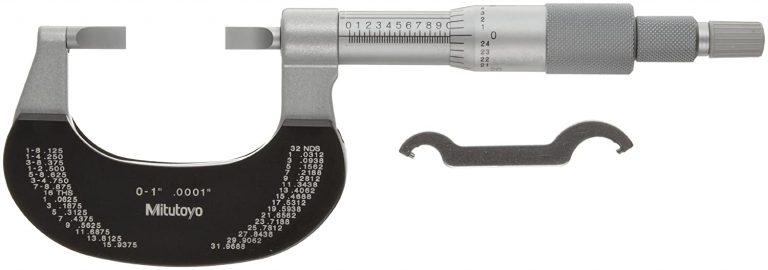
Blade micrometer

mitutoyo blade micrometer
Mitutoyo Blade Micrometer

Blade micrometers are used for measuring narrow features such as grooves, slots and keyways. The spindle of a blade micrometer won’t rotate to allow accurate alignment and measurement of your part.

V anvil micrometer

These micrometers are used to check for an out of round condition, sometimes called lobing. They are often used in the centerless grinding industry.

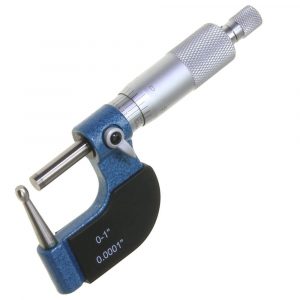
Tube micrometer

anytime tools tube micrometer
Anytime Tools Tube Micrometer

Used almost exclusively for measuring the wall thickness of round objects such as…you’re never going to guess.

Alright, I’ll tell you. They measure tubes! Surprising, I know!

The anvil on these micrometers is more rounded than what you would see on a micrometer with rounded anvils

Pitch-diameter micrometer

These micrometers have a special anvil and spindle to allow them to measure the opposite sides of a thread. The anvil has a double v shape while the spindle is pointed.

They have an overall measuring range such as 0-1” or 1-2” like a standard micrometer but also have a range of threads per inch or mm that they are capable of measuring.

Multi-anvil or universal micrometers

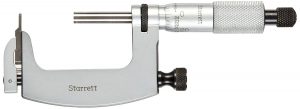
Starrett Mul-T-Anvil Micrometer

These micrometers allow you to switch the anvil so that the tool can take multiple types of measurements. One multi-anvil mic can take the place of an outside, tube and rounded anvil micrometer all in one.

Groove micrometers

Groove micrometers are used for taking measurements of grooves and other small features. Their low profile allows them to be used in tight spaces.

Disc micrometers

fowler disc micrometer
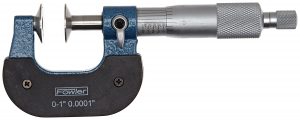
Fowler Disc Micrometer

This type of micrometer is frequently used for measuring thin sections of a part such as a sheet of material or the ribs or fins on a component. Often, they come with non-rotating spindles to keep the thin material from being twisted and giving an incorrect measurement.

Micrometers with special frames

Micrometers with insulated frames

outside micrometer
Mitutoyo Micrometer With Insulated Frame

Heat can cause metal or other materials to expand. When this happens, your part can appear to measure larger than it actually is. The same principle affects your measuring tool as well. This is why many micrometers will have an insulated grip to keep you from transferring your body heat to the micrometer and affecting the measurements.

Bench micrometer

Bench micrometers work like a combination micrometer and micrometer stand. They are used when the part to be measured can be brought to the workbench and will provide all the same benefits of using a good quality micrometer stand.

Sheet metal micrometers

mitutoyo sheet metal micrometer
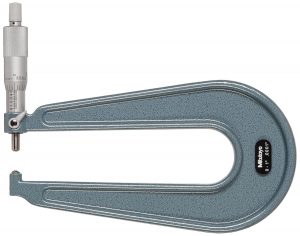
Mitutoyo Sheet Metal Micrometer

Sheet metal mics will allow you to take a measurement away from the edge of the material. Useful for working with, well sheet metal duh but also other materials where you want to get closer to the center of the part and need the clearance to be able to do it.

Hub micrometer

Hub micrometers are used when a shallow frame is needed such as when you need to insert the tool into a hole to take a measurement.

Micrometer head

mitutoyo micrometer head
Mitutoyo Micrometer Head

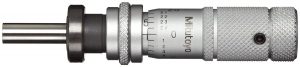
Micrometer heads don’t have a body or frame. They are used for all sorts of applications where an adjustment needs to be made with a great deal of accuracy.

Some common uses are for in fixtures as well as machine setup.

Special application micrometers

Crankshaft micrometer

A specialized set of micrometers that have a larger than normal measuring range that allows them to take measurements you might need when working with crankshafts.

This range is typically from 1 ½” to 3 ½”.

Disc brake micrometer

Another special application micrometer. They are used for measuring the depth of the grooves in your brake rotors. Like the sheet metal micrometers, they have a frame that allows measurements farther away from the edge of the brake rotor.

Paper gage micrometer

Used in the paper and printing industries, these micrometers feature wider spindle and anvils that help keep them from compressing the material being measured to make sure the readings are accurate.

Micrometer accessories

Micrometer balls

starrett micrometer ball
Starrett Micrometer Ball

This attachment allows a standard outside micrometer to function like a tube or rounded anvil mic. The attachments do reduce the overall measuring range of your tool so keep that in mind.

Additionally, you will need to subtract the size of the micrometer balls into consideration when calculating your measurement.

Micrometer stands

grizzly industrial micrometer stand holding micrometer
Micrometer Stand Holding A Micrometer

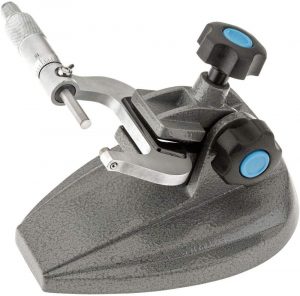
Micrometer stands can give you a third hand when using your micrometer. While they work well to give you more freedom for maneuvering your part, they also help to reduce any heat transfer to the micrometer which could affect your measurement.

Related articles

For more information check out these related articles:

Ultimate Guide to Measuring Caliper Accuracy

Measuring calipers can be extremely capable measuring devices when in the right hands.

Knowing the limitations of your calipers and how you affect them is what will make you the “right hands” for the job.

I’m going to run you through the different aspects that affect caliper accuracy. I’ll start with the most basic topics and work from there so feel free to skip ahead if you already know about a subject.

Size of calipers

0-6" calipers

mitutoyo digital caliper
0-6" Mitutoyo Digital Caliper

The most common type of measuring caliper is a 0-6” caliper. If you are working in metric, this will be a 0-300mm caliper.

There is some variety in what they are capable of but in general they will be able to measure inside, outside and depth measurements over a 6” measuring range.

Larger and smaller calipers

Calipers do come in many different size measuring ranges. They are used much less often but you will still run into them.

0-12” calipers are the next logical choice when it comes time to measure a bigger part. The reason you wouldn’t use them all the time is because they are big and can be awkward to use.

0-24” calipers have the same issue and are even more awkward. Typically, you would only use the larger calipers in a situation where you could not use a caliper.

There 0-4” and 0-8” varieties that can be found as well and all types of specialized measuring ranges can be special ordered.

0-24" Calipers

Larger calipers will be more expensive than small calipers. The added expense is for accuracy. It gets much harder to maintain the accuracy seen in smaller calipers over larger measuring ranges.

Note: Calipers with larger measuring ranges tend to be less accurate. For example, the same Mitutoyo caliper in a 0-6” version has a specified accuracy of +/- 0.001” and the 0-24” version has an accuracy of +/- 0.002”. They are only half as accurate. This only gets worse when you realize larger calipers from lesser known manufacturers may be even less accurate.

Types of calipers

There are three main types of calipers. They are very similar with the main difference being how the actual measurement is read.

Vernier calipers

vernier caliper measuring thickness of brass part
Vernier Caliper Scale

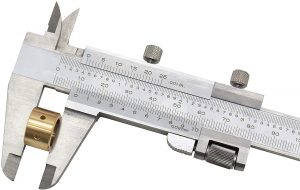
Often referred to as simply “verniers”, these calipers have multiple scales on the face of the tool that are used together to take your measurement reading.

Because they do not have any internal mechanisms, they are the most durable type of caliper and most likely to remain accurate.

Verniers are the most difficult type of caliper then it comes to reading a measurement, especially for beginners. While they are not necessarily difficult to use, they take a little more understanding than using a dial or digital caliper.

Dial calipers

anytime tools dial caliper dial face
Dial Caliper Face

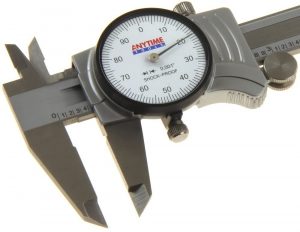
Dial calipers use a geared system to spin a needle on a dial. They have an easy to ready scale on the body of the caliper. This scale is often in .100” increments. The distance between the rulings makes them easier to read compared to the small lines which are used on a vernier.

The scale reading is used with the reading from the needle on the dial face of the tool to calculate your measurement.

Dial and vernier calipers are very similar in cost. Both do not require batteries which means they are always ready to take a measurement.

Digital calipers

digital caliper measuring coin
Digital Caliper Display

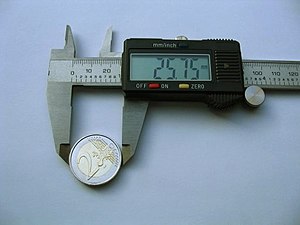
Digital calipers use electronic sensors to give a measurement reading. They are easily the simplest caliper to take a reading with.

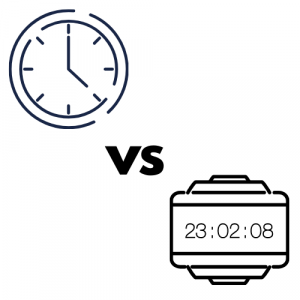
The values get read off the LCD display like an alarm clock.

At one time they were very expensive and still somewhat are. In recent years, they have dropped in price and gotten more reliable. Tools made in China and other lower labor cost countries have improved in quality, though they can be hit or miss when compared to established tool and gauge companies.

There are many digital calipers available which are not nearly as accurate as they would lead you to believe. This is because their resolution is finer than their accuracy.

Typical accuracies for different types of calipers

A caliper should be accurate to .001”. There are cheap ones or shoddy quality ones that will fail to meet this accuracy but when most people think about calipers, they expect it to be accurate to .001”.

Accuracy is similar across the different types of 0-6” calipers and it may look like digital calipers have better resolution but that isn’t exactly true.

Often digital calipers will have displays that read out farther than they are accurate to. There isn’t any point taking a reading to 5 tenths of an inch or .0005” if the tool isn’t accurate to that level.

Be careful. Some digital calipers will make you think they are more accurate than they actually are.

How cost affects accuracy

Small calipers are easier to make than large ones at the same accuracy. To get a caliper accurate to .001” at 6” will be much easier than at 24”. This is why the cost goes up quickly for larger calipers or their accuracy goes down.

Some calipers will sacrifice accuracy to keep costs down. Some budget level calipers do not meet an accuracy of +/- 0.001” for a 0-6” caliper. Pay attention to the specified accuracy when comparing different tools.

Keep in mind that if something seems too good to be true then it probably is such as a cheap, large range caliper that claims accuracy to +/- 0.001”.

What tools are more accurate than a measuring caliper?

outside micrometer
0-1" Outside Micrometer

Micrometers are another tool frequently used by people who also use calipers to take measurements. The typical accuracy of a micrometer is a tenth of an inch or .0001”. This is 10x more accurate than a caliper.

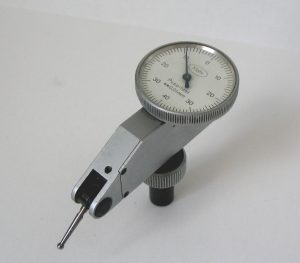
Dial and test indicators are another type of tool used in machine shops. They usually have dial faces with a needle, or occasionally you will find digital versions.

The accuracy of these indicators varies from .001” for many dial indicators to .00001” for test indicators. Test indicators can be 1000x more accurate than dial indicators and calipers.
dial indicator
Dial Test Indicator

Accuracy vs resolution

Resolution is the how finely your tool will give for a reading. It is not how accurate it is.

Imagine you measure a box.

A less capable digital caliper may measure the length of the box at 6.5005”. The problem is that the caliper may only be accurate to +/- 0.001”. This means you could take that same caliper and measure the same box again, in the same exact location and get a reading of 6.4995” or 6.5015”

Tips for increasing your accuracy using calipers

Know what accuracy you need

The first step is knowing how accurate of a tool you need. You might not need a caliper at all. You might need a micrometer to measure down to a tenth (0.0001”). Maybe you can get away with using a good tape measure.

I don’t know. Only you can decide what accuracy you will need.

General advice would be to get a caliper with an accuracy of +/- 0.001” or better.

Be careful how you hold your caliper

You affect the accuracy of your caliper a lot.

You want to make sure that the jaws of your caliper sit flat when you take a measurement. If they are cock-eyed when you use them, the readings will be larger than the actual size.

Luckily, for outside measurements, such as the length or width of a part, this is easy to do. You can gently rock, again I said gently, and you will feel the caliper settle in when it sits flush.

Inside measurements are slightly more difficult because the jaws do not have a flat spot to settle into. Still, you will want to use the same rocking motion, but be even more careful with it.

Repeatability

No matter what type of measurement you plan to take, take multiple readings to develop an assurance that your measurement is accurate. It is not uncommon to take a measurement and get a reading, only to take two more measurements that are both 0.005” off.

At this point you would want to take more measurements to verify that your first measurement was indeed wrong. Maybe it was dirt, or you had the tool at an angle. Either way, verifying your repeatability will help you take more accurate measurements.

Depth measurements are easy to get wrong

caliper depth base attachment
Caliper With Depth Attachment

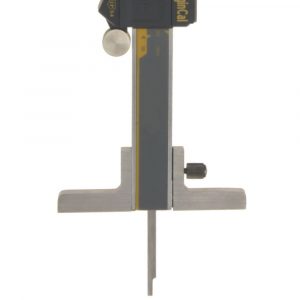
Outside and inside measurements aren’t too bad but depth measurements are where things get tricky.

Not all calipers will have the ability to take depth measurements. However, for those that do it is easy to get bad readings when using them to take depth readings.

The shape of the caliper makes them top heavy which means they have a tendency to want to tilt. If your tool moves even just a small amount, it will throw your measurement off by quite a bit.

There are attachments that you can get for your caliper to help steady your tool when taking depth measurements, but they are not a perfect solution.

Another factor affecting accuracy is that the depth measuring rod on a caliper can easily get bent or otherwise out of alignment. This is a common occurrence and even brand-new calipers can come from the factory unable to make accurate depth measurements.

Depth measurements are the most difficult type of measurement to take with a caliper and also the most difficult aspect for a tool maker to build accurately.

Be consistent with your measurements

The amount of force you use when taking measurements with your calipers will change your readings. This is called your “touch”.

If you take a measurement using a small amount of pressure on the caliper and then do the same measurement squeezing the caliper shut and holding it with some force, you will see that your readings can easily vary by a thousandth or two (0.001”-0.002”).

The easiest way to practice being consistent with the force you use to take measurements is to check the same thing over and over.

Checking the accuracy of your caliper

Cheaper calipers can be accurate, but not every cheap caliper will be. Premium tools from Mitutoyo, Starrett or other well-known manufacturers can be off too, but the odds are much less likely.

The problem is that you won’t know the caliper is accurate until you check it. This process is called calibrating. If you don’t have access to everything you need to calibrate a caliper, a less precise version of the process would be called zeroing.

Zeroing your caliper

Zeroing your calipers requires you to close them all the way and reset the zero point.

Zeroing procedure

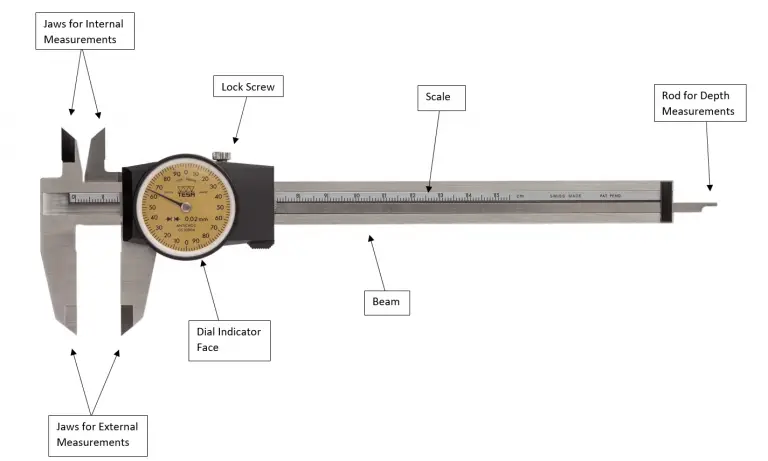
parts of a caliper

Make sure your tool is clean, especially the jaws of the caliper.

Slide the caliper closed.

For a digital caliper, hit the origin button – this will sometimes be labeled differently (such as Zero) based on the manufacturer of the caliper.

For a dial caliper, loosen the bezel lock screw, twist the dial until the needle reads zero and then lock the bezel lock screw again.

Once you have reset the zero location, make sure to verify it. Do this by opening the calipers up and then closing to the zero position again.

You want to verify that the caliper reads zero each time. The amount of pressure you put on the tool affects the measurement so make sure to use the same amount of force to close your caliper.

Consistent, gentle movements will help you get the most accurate readings out of your tool.

At this point you know your caliper is accurate at the zero location. What is not known is how that same caliper will measure at another location. It may be perfectly accurate at zero but off by ten thousandths or 0.010” at 6 inches.

This process is for your external jaws only and it is entirely possible that your jaws for measuring internal measurements such as holes may not be aligned with the external jaws. The zero location may be different for your internal and external jaws.

This is why ideally you would calibrate your calipers to verify their accuracy over the whole measuring range. Calibration requires additional equipment so many people won’t take the extra step.

What is important is to consider is what level of accuracy you need for your measurement.

Precision measuring tools = be gentle

These things are not hammers. You need to treat them gingerly. They won’t shatter into a million pieces when you set them on a bench but banging them or dropping them means you’re going to have a bad time.

The most common types of damage, all of which would affect accuracy are

  • Shock to the internal workings. This can cause excess drag in the mechanism or simply give bad measurements.
  • Damage to the jaws of the caliper such as nicks or burrs. Even a very small nick can cause your measurement to be off. The inside measurement jaws are more likely to be damaged than the outside measurement jaws.
  • The depth measuring rod can get bent or otherwise damaged and give bad readings. The rods tend to be long and thin which means it doesn’t take much force to damage them.

Calibration

gauge block set
Set of Gauge Blocks

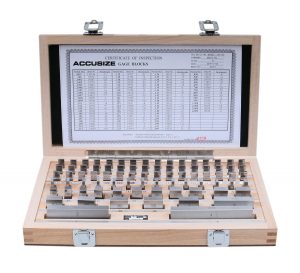
Calibration involves taking a known length standard such as a set of gauge blocks and using them to check the accuracy of the caliper over its whole measuring range.

You would check the caliper at 0 inches, 6 inches and at random intervals between the two. This is the super simplified version of a calibration procedure. If you want a more detailed instruction, then check out our guide to caliper calibration.

Related articles

Measuring Calipers

Prices have dropped significantly in recent years meaning that many digital calipers are directly competing with your standard dial calipers. Find out which ones are the best of the best as well as check out our tips, tricks and calibration guides.
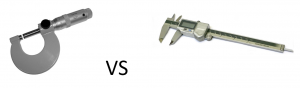
People have been taking precision measurement with dial calipers for decades. So why stop now? Check out our guide to dial calipers to figure out which ones are quality and which ones are just over priced. Lots of extra info so there is something for everyone.

Analog vs Digital

Old School vs New School

Which caliper comes out on top and why? Read out comparison guide to find out.

Learn how to get the most accuracy possible out of your caliper.

Includes comparisons of different caliper types and guidance for figuring which one is right for you.

There are a lot of digital calipers out there and let me tell you, they are not created equal. Find out which ones are best in class and which ones belong in the trash.

Just starting out? Then check out our Beginner’s Guide to Calipers – Dial and Digital to kick start you knowledge and get you headed in the right direction.

Standard Micrometers

Find the very best mics out there. Includes picks for great analog and digital micrometers. Guidance for finding good used micrometers as well!

Learn how to calibrate your own tools using our simple step by step guide. Includes guidance for calibration frequency and real world calibration advice.

Two incredibly useful measuring tools with some key differences. Find out what makes each piece of precision measuring equipment special. Includes tips for figuring out whether you need one or the other, or maybe both.

When it comes to micrometers, some of these manufacturers have been making tools for an extremely long time. Like 100 years or more. Find out which ones have been consistently the best so you can spot a great flea market find.

Micrometers are wonderful tools but they have their limitations. One of those limitations is the small measuring range, so if you want to measure with extreme accuracy across a wide variety of sizes then you’re gonna need a set. Find out which ones top our list. You just might be surprised.

Ultimate Guide to Micrometers

Find out which micrometers top our list. Includes analog and digital choices as well as the best depth mics. Tried and true tips for finding quality used tools too!

Learn how to calibrate your own tools using our simple step by step guide. Includes guidance for calibration frequency and real world calibration advice.

All of our handy guides to digital mics located in one place. Includes tool reviews as well as tips and tricks for keeping your micrometers working well for years to come.

We get it, you like to keep things old school. Lucky for you we have great guides to help you find the best analog mic and keep it in tip top shape. Find the right mics and they just might last more than a lifetime.

More micrometer resources

When you need extreme accuracy, you need micrometers. Unfortunately their measuring range means that if you want to be able to check a wide variety of sizes, you are going to need a set. Luckily, we have laid out the best micrometer sets and the things you should consider when purchasing a micrometer set.

Each of these precision measuring tools has their uses. While they are similar, they have some big differences. Find out what makes each tool special and ultimately what they specialize in doing.

Micrometer stands are extremely useful for checking parts that require the utmost precision. When something as simple as your body heat can affect the measurement, a quality micrometer stand steps in to help. We pick the best ones and provide tips for use.

Measuring Tool Calibration Guides

If your measuring device isn’t reading correctly then it might as well be useless.

But how do you know if you can trust that your tool is accurate?

Check the calibration of course!

And you check the calibration by checking our guides to calibrating your precision measuring tools below.

Micrometers are one of the most accurate tools many people will ever use. Keep them in tip top shape by calibrating them regularly.

Digital Caliper Calibration

Calipers are capable of many types of measurements. Digital calipers make those measurements easy to read. Our guide makes calibrating easy to do.

Dial Caliper Calibration

We get it, some like to kick it old school. Well, we’ve got you covered with our complete guide to calibrating your dial calipers.
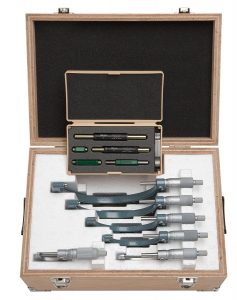
37 Different Tools for Measuring Length

wooden ruler for measuring length sitting on desk

The world is full of amazing measurement tools. Some you might not even think about even though they are all around you.

Our list covers everything from common length measuring equipment to super expensive devices that use lasers to calculate distance and everything in between. If you need to size up something in your life, then check out the comprehensive list below.

Household length measuring tools

I got one, you got one. We all got one. These length measuring tools can be found in many homes around the world. If you are looking for something more exotic, stick around because we saved the weird stuff for last.

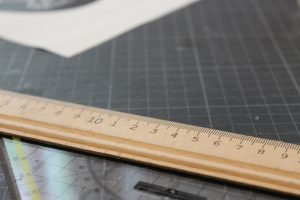
Ruler

wooden ruler for measuring length sitting on desk

Everyone knows this one. It is one of the first measuring tools that kids learn to use in school. Most come in a 12” length.

They are made of different materials including plastic, wood, and metal. The steel rule is another name commonly used to describe a metal ruler. There are also other rulers used in certain trades which we have listed below in our Specialty Length Measuring Tools Section.

Yard stick

A preferred measuring tool for crafters and anyone working with fabrics. You’ll never guess how long this measuring tool is.

Side note: They also make an excellent wooden weapon in the event of sudden swordplay.

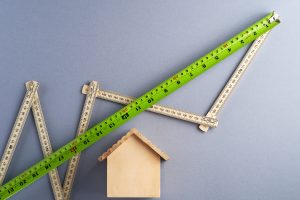
Folding rule

Somewhere between a ruler and a tape measure. They are not nearly as common as they were decades ago.

The folding rule has largely been replaced by your typical tape measure, but are still a favorite of many woodworkers.

folding rule and tape measure

Tape measure

A common, everyday construction tool. Check your junk drawer. You probably have one already. They come with different measuring ranges. The most measuring ranges measure up to 10-30 feet.

Measuring tape

folded measuring tape

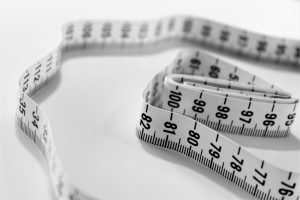
I bet we just confused the dyslexics. Measuring tapes are used for measuring body parts as well as other contoured shapes. They are used in the sewing and tailoring industries primarily.

Some call them flexible rulers instead.

Pedometer

pedometer

Fitness trackers such as those from Fitbit or Garmin that keep track of all the steps you take. They combine it with your stride length (based on your height) to tell you how far you traveled on foot.

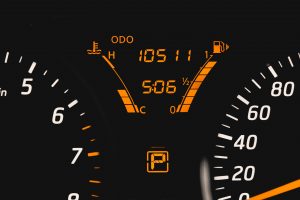
Odometer

odometer measuring miles travelled

Are we there yet? Odometers measure the distance that your car has travelled. Take a short trip and figure out how far it is to the grocery store or check the total distance your car has travelled in its lifetime.

Precision length measuring tools

Not your everyday tools. These length measuring instruments measure things with extreme accuracy. Some you can find at your local Walmart while others cost so much if you want one, you’re going to need a few more full-time jobs.

Micrometer

outside micrometer

Used by machinists and mechanics alike, micrometers are extremely precise length measuring tools. They come in many different types such as inside, outside and depth micrometers. Most will measure accurately to .0001”. That’s really small.

Like a human hair divided by 30! The only catch is that most micrometers can only measure over a 1” range.

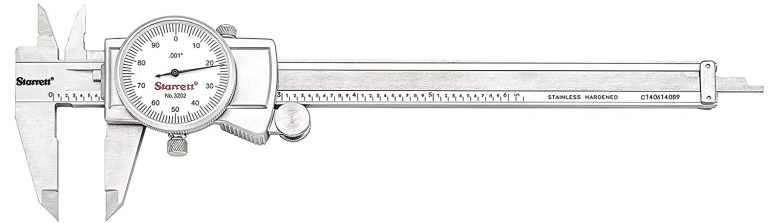
Dial caliper

Starrett 3202-6 0-6" dial caliper

Unlike micrometers, dial calipers are a little more versatile. They can’t measure as accurately but they can do more. Most calipers are capable of measuring inside, outside and depth measurements all with the same tool.

They have about 1/10 the accuracy but that is still extremely precise for most uses.

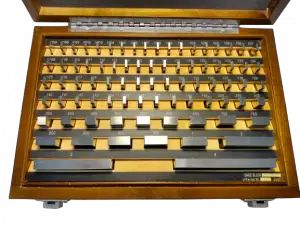
Gauge block

gauge block set

Gauge blocks are a tool used for comparison measurements of length. They get stacked up and another tool such as a test indicator is used to compare the two lengths.

They are reference standards for length measurements. Many come in stainless steel but different materials such as ceramics are available too.

Feeler/thickness gauge

They check the length of small gaps. Feeler gauges are used in engine repair and the machine trades.

The different size gages in the set get placed into the gap until there is resistance or the next size won’t fit. They get used in tight spots where other measuring devices can’t fit.

Dial indicator

dial indicator

Different indicators have different measuring ranges. While they can be more accurate than a micrometer, they usually have an even smaller measuring range. They typically can only take measurements over a fraction of an inch.

They can be setup at different distances which allows them to be more versatile by taking comparison measurements relative to a standard such as the gauge blocks we just mentioned.

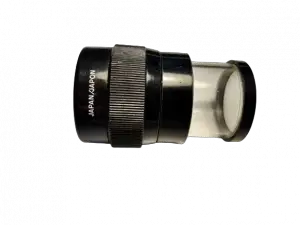
Pocket comparator

eye loupe

Sometimes called an eye loupe, or jeweler’s loupe, these optical measuring tools come with a reticle in the eyepiece that allows them to measure the length of small objects such as gems.

Their magnification and versatility allow them to measure a wide variety of shapes and sizes.

Dial snap gauge

These length measuring gauges allow the user to get fast, repeatable measurements of a variety of features. Typically, they will get set to zero at a desired length and then parts will be measured against the nominal desired size.

Speed is the name of the game here and this gauge does it in a snap.

Height gauge

Height gauges are used to measure distances from a reference point such as a surface plate. Not only used for heights, but the parts can also be twisted and turned to measure length, widths and depths as well.

Height gauges are a versatile tool for measuring a variety of features.

Depth gauge

This tool gets used for many different measurements. Most often they are used in woodworking to setup saws and routers. Their unique shape allows them to take measurements that would be more difficult with other tools.

Optical flat

This one only works when you have something very flat. The optical flat gets placed on the part to be measured and the light creates a pattern of interference rings that can be counted to tell you how far apart your highest and lowest point on the part are.

These can be expensive, so you probably don’t have one in your junk drawer. Or maybe you do. I don’t know how many millionaire retired optical engineers might read this.

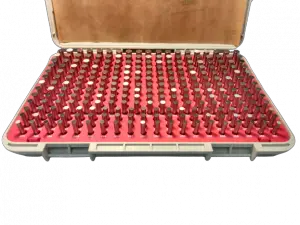
Gauge pins

gauge pin set

Remember Goldilocks and the three bears? Gauge pins work like that. You keep trying them until the next one doesn’t work and this way you know which one is “just right”.

It’s a game of trial and error but you usually have an idea of where to start your measurements. Gauge pins come in sets with each one having 50-250 pins on average.

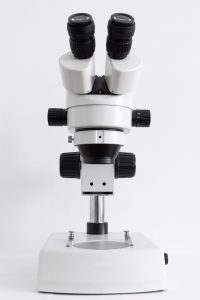
Microscope

microscope

Like a less portable version of the pocket comparator. Microscopes tend to be extremely accurate. They get used for measuring small parts as well as used in scientific applications. You can expect to find them in many industries including healthcare operations, jewelry stores and machine shops.

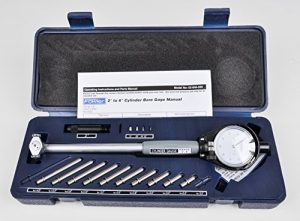
Dial bore gauge

fowler dial bore gage set in case

Dial bore gauges accurately measure hole sizes and other internal features. They are dial indicators with a special measuring attachment that allows them to take readings in otherwise unreachable locations

Electronic length measuring tools

Who doesn’t like electricity? These linear measuring tools consist of some of the most advanced measuring technology available.

Interferometer

They are the digital version of an optical flat. They are way more accurate and also way more expensive. It is pretty neat to measure something in waves of light but most won’t want to take a second mortgage on their home and sell their most well behaved child to be able to make it happen.

Electronic indicator

Electronic indicators work on the same measuring principle of dial indicators. Often, they are more accurate and are capable of things like switching between measuring units at the press of a button.

You can find many examples that will measure down to a millionth of an inch!

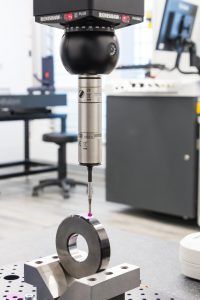
CMM

cmm measuring part

A CNC inspection machine capable of measuring length, width, thickness, and a variety of other attributes at the push of a button. An expensive and highly capable measuring tool.

Just set it up and press go. The CMM can then check dozens or even hundreds of measurements on dozens or even hundreds of parts. Because they are so automated, an experienced user can run multiple machines at once and really get some work done (aka browsing the internet on their phone).

Optical comparator

A shadow measuring machine. You place your part between the light and some lenses and presto, you get a shadow image.

The cool thing about optical comparators is that the shadow can be measured to determine all kinds of sizes such as length, width, thickness, etc.

Digital micrometer

mitutoyo digital micrometer

An electronic version of a normal micrometer. They come in a variety of types including digital outside and depth micrometers. Digital micrometers make it easier to read your measurements because they don’t require using the vernier scale that is used on a normal micrometer.

Digital caliper

mitutoyo digital caliper

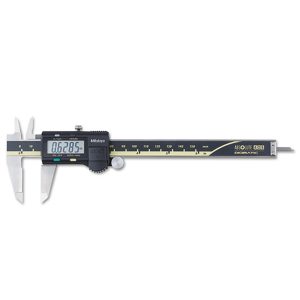
Digital calipers measure the same things as a normal caliper. Instead of a dial face or vernier scale, they have an LCD display. One nice feature is that most can switch between metric and imperial units at the push of a button. Some will even do fractions which is a nice bonus for anyone doing woodworking.

Rangefinder

A rangefinder is a distance-measuring device used to determine the distance from the user to a target.

Aim the rangefinder at a target and press a button to send an electronic pulse toward the target. The time between sending the pulse and receiving the bounce back determines the distance to the target.

Laser measuring tool

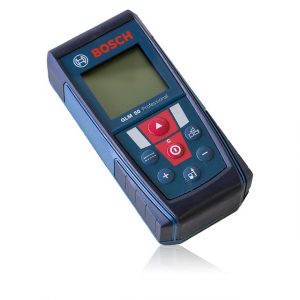
Bosch GLM 50 laser measuring tool

Laser measuring tools are very similar to rangefinders but are used over shorter distances where accuracy is more important. Rangefinders get used to measure distances outside and often laser measuring tools are used around the house or nearby.

GPS

GPS app on smartphone

GPS receivers receive signals from satellites (at least 3) and use them to calculate the GPS units exact position on Earth.

A GPS device such as your phone can also communicate with other devices, telling them where it is and how fast it’s moving. GPS can even be used to determine how far away from your house the pizza delivery driver is.

Machine vision systems

A relatively new invention, machine vision systems use cameras to measure distances and features optically. Something like an automated CNC microscope and they do it all without ever touching the things they measure.

Radar

Radar is a system that uses radio waves to detect and locate objects such as ships, aircraft, and even snowstorms. Radar can even detect, locate, and track objects through rain, snow, fog and other bad weather conditions.

Fun fact: radar is one of the most successful inventions in modern history because it has drastically reduced the number of casualties in warfare and regularly saves people from weather related disasters.

Specialty length measuring tools

Oh, I see! You’re looking for the weird stuff. Well, the tools below fit the bill. It’s easy to see why you might use a ruler or tape measure but these length measuring instruments are a little more different.

Surveyor's wheel

A great alternative to a Fitbit. Just push this measuring wheel around all day and you’ll easily know how far you have traveled. People will think your strange but just tell them you are “eccentric”.

Architects scale

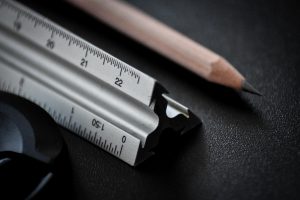
architects scale and pencil

Don’t tell the architects but it’s just a fancy ruler. I bet they paid extra for the name.

An architect’s scale has more precise markings than a standard ruler and comes in a triangular shape which does something. I don’t know what, but building designers love it!

Paint thickness gauge

It’s almost like magic! A paint thickness gauge can measure the thickness of your car paint or other coatings through the use of a magnetic current. They find use in auto body shops and manufacturing facilities throughout the world.

Tire tead depth gauge

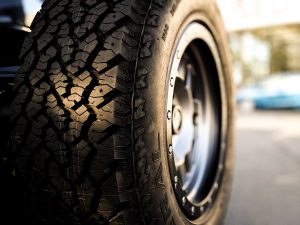
tire tread

A tool used for the singular purpose of measuring how much tire tread is left. An important length if there ever was one. Stay safe and keep the length of your tire treads as long as possible to keep your grip on the road.

Pi tape

Not that kind of pie. Pi tapes are similar to a fancy measuring tape. Perfect for measuring the length around an object (circumference).

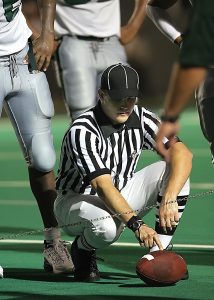
Football chains

measuring football distance with chains

They are used for a measurement of a single length only, but they do it admirably. The first down distance of 10 yards is measured by a “chain gang” crew of officials who are tasked with keeping tabs on the location of the game ball.


Wow! Who knew there were so many length measuring tools out there in the world?

I tried to get all of the measuring instruments listed all in the same place but if I forget any, make sure to let me know by leaving a comment below. I’ll make sure to add it to the list.

Digital Micrometer Reviews

Ultimate Guide to Digital Micrometers

Digital micrometers are one of the most accurate measurement devices available for precisely measuring parts of all sizes.

Machinists and hobbyists around the world use them in their everyday work. A good 0-1″ micrometer is likely the only precision measuring tool that can compare in use to a set of digital or dial calipers.
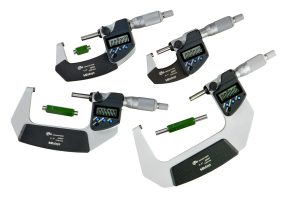
Because they get so much use, it is important to make sure you get a quality set of micrometers and more importantly, that you know how to use them to achieve the accuracy they are capable of.

Check out our guides and tips below to further your understanding of digital micrometers.
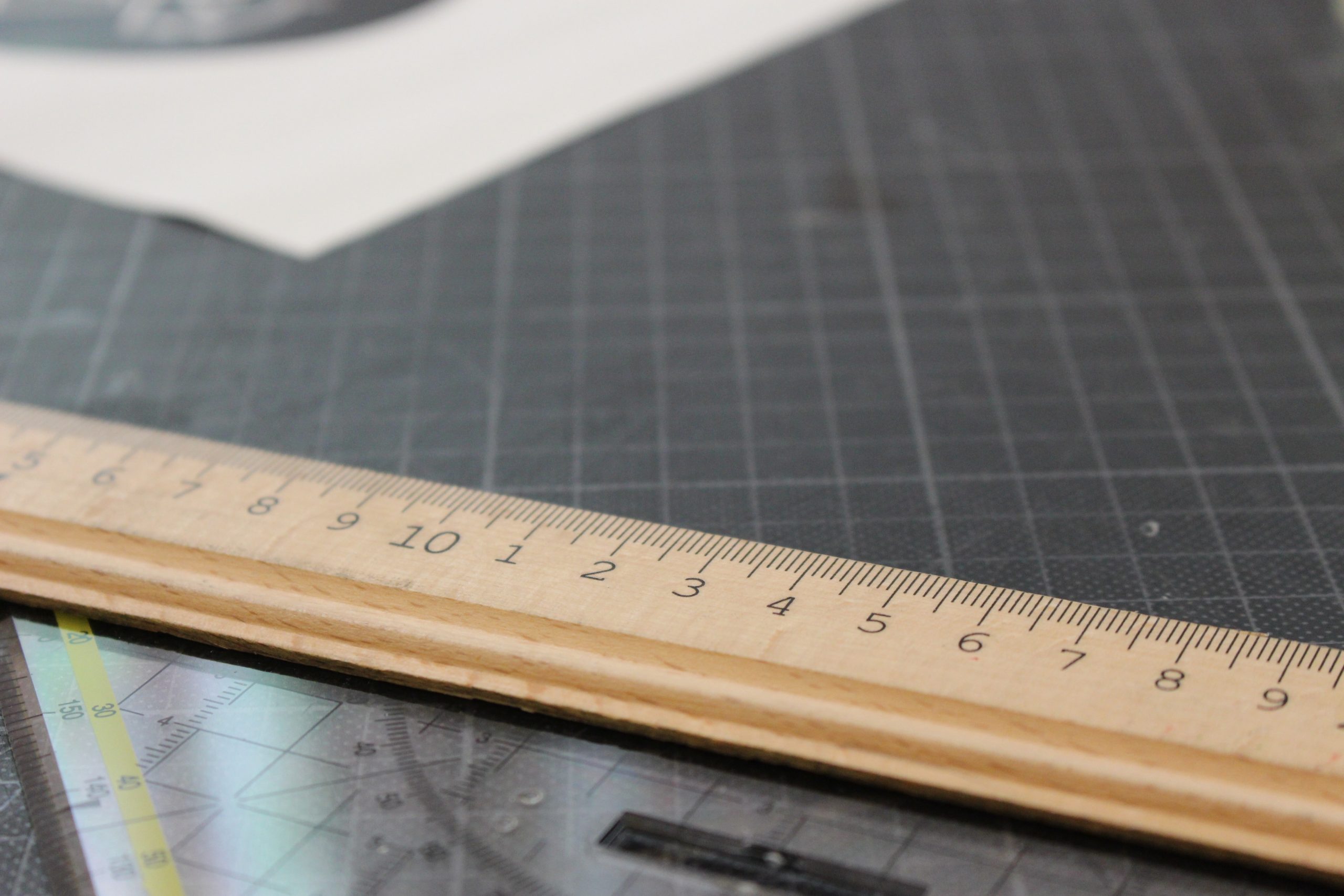
micrometer icon

A Beginner's Guide to Micrometers

Everything you need to know to get started with digital micrometers. Includes all of the frequently asked questions that come up when working with digital micrometers.
trophy icon

Digital Micrometer Buyers Guide

Find out which digital calipers top our best of list. Includes an extensive list of things to consider when purchasing a digital micrometer.
Digital Micrometer Info Guides

Explore our selection of informational guides to expand your knowledge of digital micrometers.

review icon

Digital Micrometer Reviews

Check out the latest digital micrometer reviews from well-known brands such as Mitutoyo, Starrett, Anytime Tools, and many more.

Recommended articles